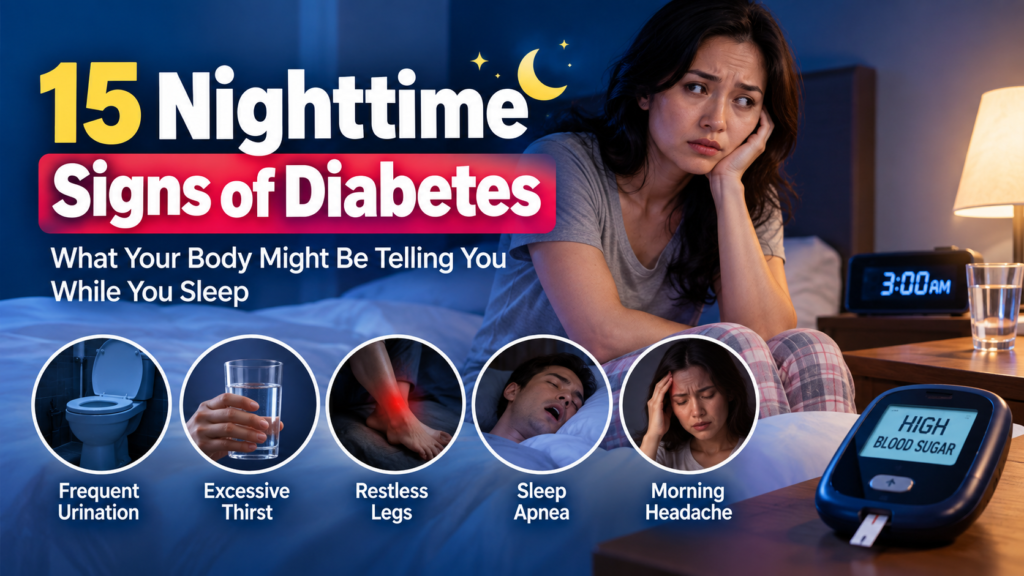
Have you ever woken up thirsty, sweaty, or needing the bathroom again and again? These could be nighttime signs of diabetes. Many of them also have other causes, so they don’t prove you have diabetes. But when high or low blood sugar is behind them, noticing them early can help you get tested and treated sooner. This guide explains 15 common nighttime signs, why they may happen, and when to see a doctor.
1. Waking Up Often to Urinate
When blood sugar is high, your kidneys work harder to remove the extra sugar through urine. This pulls more water out of your body, so you may need the bathroom several times a night. Doctors call this nocturia. It also has other causes, such as drinking fluids late or other health conditions.
2. Intense Thirst or a Dry Mouth
Losing extra fluid through urine can leave you dehydrated. Your body responds with strong thirst, and you may wake up with a dry mouth or reach for water repeatedly. Constant thirst is a classic early sign of high blood sugar.
3. Night Sweats
Waking up with damp sheets can happen when blood sugar drops too low at night. This is most common in people who take insulin or certain diabetes medicines. Night sweats have many other causes too, including infections, menopause, and some medications.
4. Burning, Tingling, or Numb Feet
Over time, high blood sugar can damage nerves, especially in the feet. This is called peripheral neuropathy. Many people notice the burning or tingling feels worse at night when things are quiet and they’re lying down. Please see a doctor about this one, since nerve damage needs proper care.
5. Leg or Foot Cramps
Sudden cramps in the calves or feet can wake you from sleep. They can be linked to nerve problems, dehydration, or certain medicines. Cramps alone don’t mean diabetes, but frequent ones are worth mentioning to your doctor.
6. Restless Legs
Restless legs syndrome is an urge to move your legs, especially when resting at night. It is more common in people with diabetes and nerve damage. Low iron and kidney problems can also cause it.
7. Trouble Falling or Staying Asleep
Needing the bathroom, feeling thirsty, nerve pain, and blood sugar swings can all interrupt your sleep. Poor sleep can also make blood sugar harder to control, so the two can feed each other.
8. Loud Snoring or Sleep Apnea
Sleep apnea means your breathing stops and starts during sleep. It is more common in people with type 2 diabetes and in people with excess weight. Signs include loud snoring, gasping, and feeling very tired during the day. It is linked to diabetes but is not proof of it.
9. Acid Reflux at Night
Heartburn that wakes you up is more common in people with diabetes. Over time, nerve damage can affect how the stomach empties. Reflux is very common in the general population, so it is a weak sign by itself.
10. Vivid Dreams or Nightmares
Waking from intense dreams or nightmares can happen when blood sugar drops during sleep. If this happens often, especially if you take diabetes medicine, talk to your doctor.
11. Waking Up With a Racing Heart
Low blood sugar can trigger stress hormones that cause a pounding or fast heartbeat. Many other things can cause palpitations too, including caffeine, anxiety, and heart conditions. Get checked if it happens often.
12. High Blood Pressure at Night
Blood pressure normally dips while you sleep. In some people with diabetes, it stays high overnight. You usually can’t feel this, so it is found with blood pressure monitoring. It is one reason regular checkups matter.
13. Waking Up Very Hungry
Strong hunger at night can happen when your cells can’t use sugar well, or when blood sugar drops. Occasional hunger is normal, but frequent hunger with thirst and tiredness is worth checking.
14. Morning Headaches
Waking with a headache can be linked to high or low blood sugar, dehydration, or sleep apnea. Headaches are very common, so look at the full picture of your symptoms.
15. Waking Up Tired
If you sleep a full night but still wake exhausted, poor sleep, high blood sugar, or sleep apnea may be playing a role. Tiredness is one of the most common signs of diabetes, but it also has many other causes.
What These Nighttime Signs of Diabetes Mean
Having one of these nighttime signs of diabetes does not mean you have the condition.. Most have other common causes. What matters is patterns: several signs together, or signs that keep happening, especially if you have risk factors such as a family history of diabetes, excess weight, or age over 45. [Add link: CDC or NIDDK page on diabetes risk factors.]
When to See a Doctor About Nighttime Signs of Diabetes
Book an appointment if you regularly notice these signs. A simple blood test, such as an A1C or fasting blood sugar test, can show whether your blood sugar is in a healthy range. You can also try our free [A1C calculator] or [diabetes risk calculator] to get a rough idea. These tools are only guides and do not replace a medical test.
Get urgent medical help right away if you have extreme thirst with vomiting, confusion, fruity-smelling breath, trouble breathing, or fainting.
Frequently Asked Questions
Can diabetes cause night sweats?
It can, mainly when blood sugar drops too low at night in people taking insulin or certain medicines. Night sweats also have many non-diabetes causes, so see a doctor if they continue.
Why do I urinate so much at night?
High blood sugar makes your kidneys remove extra sugar and water. Other causes include drinking fluids late, medications, and other health conditions.
How can I check if my blood sugar is normal?
If you notice nighttime signs of diabetes, ask your doctor for an A1C test.
Can I treat these signs with supplements?
Please talk to your doctor first. Supplements and diet changes can interact with medicines or be unsafe for some people, especially those on insulin or with kidney problems.
Conclusion
Frequent urination, strong thirst, sweating, foot discomfort, and poor sleep can sometimes point to blood sugar problems, but they can also have other causes. If you notice several of these regularly, don’t ignore them or try to diagnose yourself. Get tested and talk with a healthcare professional. Catching the nighttime signs of diabetes early makes the condition easier to manage.
Disclaimer: This article is for education only and is not medical advice. Always consult a qualified healthcare professional about your health.
Sources: [Add 3-4 links: CDC, NIDDK/NIH, American Diabetes Association, NHS or Mayo Clinic pages on diabetes symptoms.]