Have you ever looked at your blood sugar report and wondered what this number means? In a typical blood test report, a number is written, but it can be hard to tell whether it’s normal, low, or high. If you have also searched on Google, “What is a normal blood sugar level for non-diabetics?” or ” What should be the normal blood sugar with age? No worries, take a deep breath.
Blood sugar isn’t a number that stays the same throughout the day. It changes for several reasons, such as eating, sleep, stress, and physical activity, etc. So, if you’re only looking at the report, you don’t need to worry. It is important to know when the test was done, your age at the time, and your physical condition then.
The following article discusses several aspects of blood sugar, including what the normal blood sugar level is, normal blood sugar on an empty stomach and after eating, normal blood sugar by age, the blood sugar range for prediabetes and diabetes, symptoms of low and high blood sugar, and how to control blood sugar naturally.
What is Blood Sugar?
Let’s understand what normal blood sugar level is. Imagine every cell in your body is like a small house. To work, these houses need energy, which glucose provides. The main source of glucose is carbohydrates such as rice, oats, fruits, and other cereals. However, glucose alone cannot enter cells; it needs a key called insulin. The pancreas produces it. After a meal, when your blood glucose level increases, the body releases insulin, and it helps cells take in glucose.
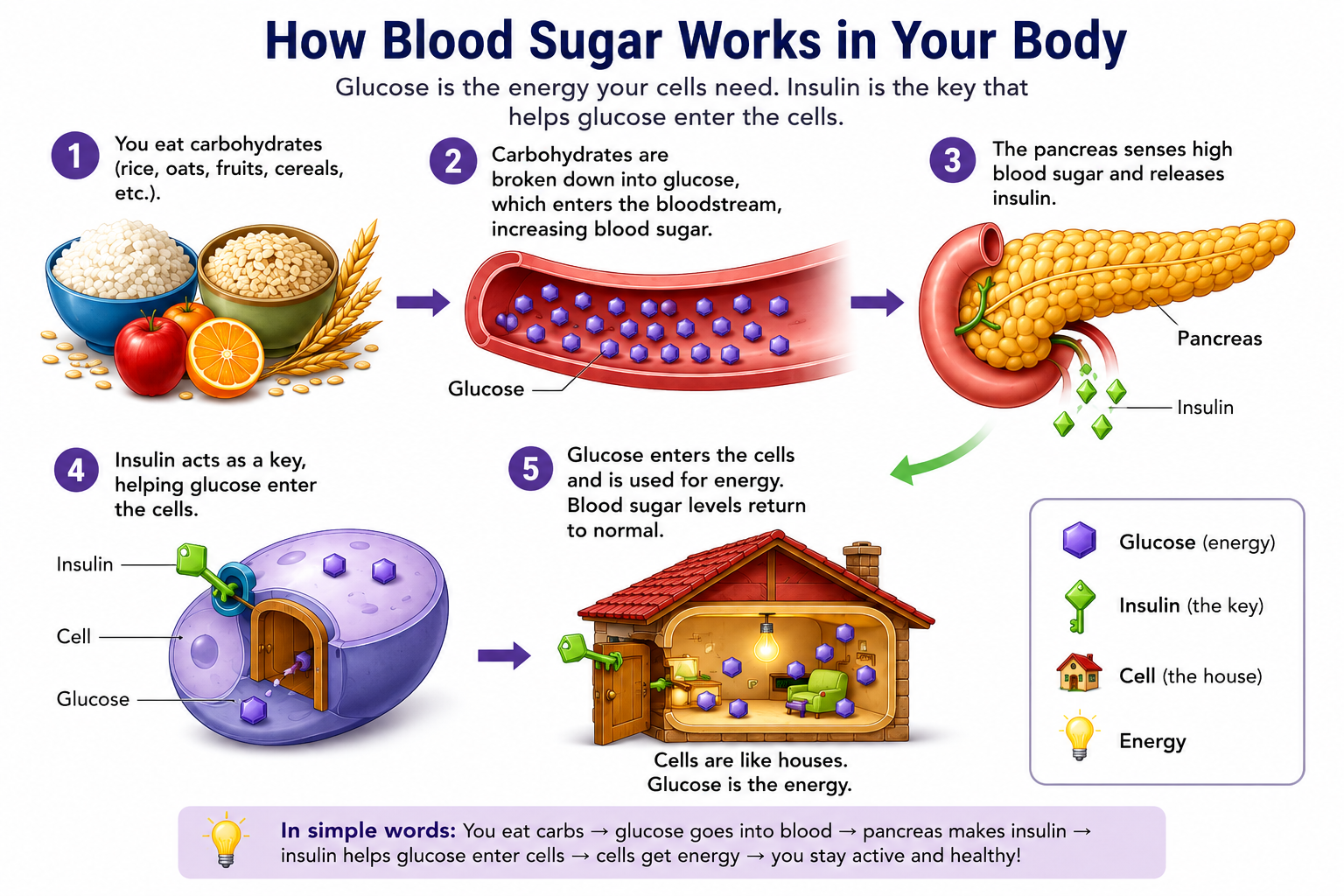
And how about when you are sleeping? Well, even when you are sleeping, your body works. The liver acts as a backup battery. When you are not eating, and your blood glucose level gets low, the liver releases reserved glucose into the blood. That is why the fasting blood sugar test shows the body’s status when you have not eaten anything for hours. That is how the body maintains a normal blood sugar level.
What Should be the Normal Blood Sugar Level?
For a normal, healthy individual, the body keeps blood glucose within a normal range. Doctors look at blood sugar levels under three basic measurements:
- Fasting Blood Sugar
- Blood sugar level two hours after a meal
- HbA1c, which gives an average three-month blood glucose level
Fasting Blood Sugar
Fasting blood sugar, as the name suggests, is the blood sugar level measured after 8 hours of fasting. However, one can drink water during these long hours of fasting. The normal fasting blood glucose level should fall within 70-99mg/dL. If your blood sugar level falls in this range, it is considered normal. Fasting blood glucose below 100mg/dL is also considered normal. If your fasting glucose level goes beyond this range, consult a doctor.
Blood Sugar two hours after a meal
It is normal to have slightly higher blood sugar after a meal. And that’s why you don’t need to get worried seeing a comparatively high blood sugar after a meal. Our body utilizes insulin to control glucose, which comes from food. For a non-diabetic individual, blood sugar level two hours after a meal should be below 140mg/dL. Let’s take a simple example: suppose you had rice and chicken in your lunch. Just after eating, your blood sugar might rise, but the body’s natural process brings it down over time.
What does HbA1c mean?
It is a very interesting question. If your blood sugar is normal today, does that mean it was normal for the last several months? Not really! A finger prick or a single blood sugar test shows your condition only at that moment. In contrast, HbA1c reflects your average blood sugar over the last three months, and it does not require fasting. Normal HbA1c below 5.7 is considered normal.
What Should be the Normal Blood Sugar Level with Age?
Should the blood sugar for a 17-year-old boy be the same as that of a 60-year-old man? Not at all! With age, muscle mass, insulin sensitivity, and body metabolism might change. Therefore, it is important to consider an individual’s age and health conditions. Growth in children and adolescents happens very quickly. During this period, hormonal changes occur. According to medical data, fasting blood sugar may range from 70-100 mg/dL. Likewise, their glucose level 2 hours after a meal should be below 140mg/dL. HbA1c targets for adults with type 2 diabetes are based on their condition.
Individuals aged 18- 64 years
| Test | Common Range |
| Fasting Blood Sugar | 70-99 mg/dL |
| 2-hours after meal | <140mg/dL |
| HbA1c | <5.7 |
In this range of people, common diagnostic ranges are used,
Individuals aged 65 and above
The above data might change significantly for individuals aged 65 and above. With aging, muscle mass starts decreasing and insulin sensitivity might change significantly. Aging could also lead to hypoglycemia. As a result, one may feel dizzy and could fall. As per many data sources, the following should be the value of blood glucose:
| Test | Common Range |
| Fasting Blood Sugar | 80-130 mg/dL |
| 2-hours after meal | 160 mg/dL |
| HbA1c | 7 – 7.5 |
Let’s check the following chart for blood sugar levels in different health conditions:
| Condition | Fasting Blood Sugar | 2-hour Glucose | HbA1c |
| Normal | <100 mg/dL | <140 mg/dL | <5.7 |
| Prediabetes | 100 – 125 mg/dL | 140 – 199 mg/dL | 5.7 – 6.4 |
| Diabetes | >126 mg/dL | >200 mg/dL | >6.5 |
When you fall in any of the categories above, do not try to do your own diagnosis. It is always better to consult a health professional.
What does prediabetes mean?
If your report falls under the prediabetes range, then do not immediately think you have diabetes or that you will get diabetes soon. It is not always necessary. You can see prediabetes as an early warning signal. It gives you a chance to change your current lifestyle and take your health seriously. So, don’t be scared by your blood report; take immediate action.
What are the symptoms of High Blood Sugar?
Our body always gives signals. If the blood sugar remains high for a long-period of time, then some people may experience a few symptoms:
- Frequent urination:
When glucose is high in the blood, the kidneys work extra hard to remove the excess. This can lead to frequent urination and dehydration.
- Hunger
When glucose does not reach cells in sufficient amounts, it can cause an energy crisis within cells and the body. This makes the person hungry and increases the urge to eat always.
- Tiredness and Brain Fog
If the body can’t use excess sugar in the blood, it can lead to tiredness and poor concentration.
- Blurred Vision and Tingling in the Feet
Due to high blood sugar, some people may experience temporary blurred vision. With uncontrolled high glucose, nerves and blood vessels may be affected.
What is Low Blood Sugar or Hypoglycemia?
When blood sugar goes below 70mg/dL, it is called hypoglycemia. This condition could be dangerous for people taking insulin or glucose-lowering medicines. Some of the common symptoms of low blood sugar are mentioned below:
- Shaking hands or trembling
- Sudden sweating
- Rapid heartbeat
- Dizziness
- Restlessness or anxiety
- Irritability
- Difficulty concentrating
- Confusion or difficulty speaking
How to Control Blood Glucose Level Naturally?
The good news is that for normal blood sugar level management, you don’t need to follow a restrictive diet. Small daily habits can also help manage blood glucose levels. For instance, do not eat carbohydrates alone. When you consume carbohydrates, add proteins, healthy fats, and fiber to your meal. Next, walk for at least 10-15 minutes after taking a meal. Also, don’t ignore sleep and stress. Sleeplessness and stress may increase cortisol and adrenaline levels. These hormones may trigger the liver to release stored glucose into the blood. That’s why healthy food, physical activity, sound sleep, and stress management are inevitable for maintaining normalblood sugar level.
Frequently Asked Questions (FAQs)
Q. What should be the fasting blood sugar of an individual?
A. For a non-diabetic normal individual, the fasting blood sugar should be about 100 mg/dL. In other words, the range could be between 70 and 99 mg/dL.
Q. What should be the blood sugar level 2 hours after the meal?
A. In adults, it should be about 140 mg/dL. In older adults, it may be different.
Q. Does normal blood sugar level change with age?
A. Yes. With age, muscle mass and insulin sensitivity change. Doctors set different targets for people older than 65 years.
Q. What should be done to lower blood sugar?
A. If your blood glucose level is getting high, start taking a brisk walk and drink lots of water. However, if your blood sugar level keeps rising, consult a health professional.
Q. How many times an individual should go for blood sugar testing?
A. People aged 35 and above should go for regular screening. If the result is normal, then go for a blood test every 3 years. People with risk factors should be tested more often, such as every 6 months or as directed by a health professional.